In today’s fast-paced and ever-evolving technological landscape, artificial intelligence (AI) has emerged as a transformative force, reshaping industries and redefining the way we live and work. AI development services are at the heart of this revolution, enabling businesses to harness the power of AI to enhance their operations and customer experiences. Among the various branches of AI services, Adaptive AI development services stand out as a cutting-edge approach that holds great promise. In this article, we will explore what adaptive AI development services are, their significance, and how they are shaping the future of AI technology.
The Essence of Adaptive AI Development
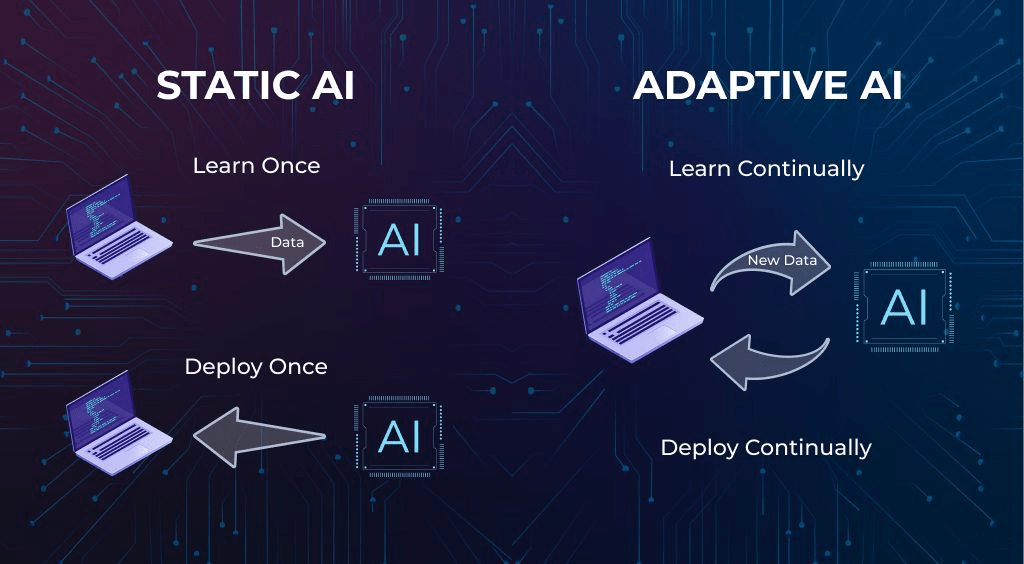
Adaptive AI development services represent a shift in the traditional AI paradigm. Instead of creating static, pre-programmed AI systems, adaptive AI development focuses on building intelligent systems that can learn, evolve, and adapt in real-time. These systems have the ability to continuously improve their performance based on the data and experiences they encounter.
At the core of adaptive AI development is machine learning, a subset of AI that allows algorithms to analyze data, recognize patterns, and make predictions or decisions without being explicitly programmed. However, what sets adaptive AI apart is its capacity to adapt to changing circumstances and improve over time, making it more efficient, effective, and accurate.
The Significance of Adaptive AI Development Services
- Enhanced Problem-Solving: Adaptive AI development services excel in solving complex, dynamic problems. They can analyze vast amounts of data, make predictions, and adjust their models as new data becomes available. This adaptability is particularly beneficial in fields like healthcare, finance, and logistics, where conditions are constantly changing.
- Personalization and Customer Experience: Adaptive AI can create highly personalized experiences for customers by understanding individual preferences and behaviors. This level of personalization can significantly boost customer satisfaction and loyalty in e-commerce, content recommendation, and other customer-facing applications.
- Autonomous Decision-Making: In industrial automation and autonomous systems, adaptive AI can make critical decisions based on real-time data, improving safety, efficiency, and overall performance.
- Cost Efficiency: Adaptive AI systems can optimize processes and resource allocation, reducing costs and maximizing returns. Businesses can benefit from automated, data-driven decisions in resource management, supply chain, and quality control.
- Continuous Learning: These systems continuously learn and adapt, reducing the need for frequent updates and manual intervention. This means less maintenance and a longer useful life for AI systems.
Applications of Adaptive AI Development
Healthcare
In the healthcare sector, adaptive AI development services are proving to be game-changers. These systems can analyze patient data, making more accurate diagnoses and personalized treatment recommendations. Moreover, they can adapt to new medical findings and changing patient conditions, ensuring that medical professionals always have access to the most up-to-date information.
Finance
In the financial industry, adaptive AI is used to detect fraud, assess credit risks, and optimize investment portfolios. These systems can adapt to market fluctuations, helping financial institutions make more informed decisions and reduce risks.
Autonomous Vehicles
The development of autonomous vehicles relies heavily on adaptive AI. These vehicles use AI algorithms to adapt to real-time traffic conditions, ensuring safer and more efficient transportation.
E-commerce
Adaptive AI plays a crucial role in e-commerce by providing personalized product recommendations and improving the overall shopping experience. These systems analyze user behavior and preferences, adapting to individual tastes and preferences.
Manufacturing
In manufacturing, adaptive AI development services can optimize production processes by predicting equipment failures and recommending maintenance, reducing downtime and increasing productivity.
Challenges and Considerations
While adaptive AI development services offer immense potential, they come with their share of challenges. Ensuring data privacy and security, addressing bias in AI algorithms, and building robust systems that can adapt without compromising safety are critical concerns. Furthermore, there is a need for regulatory frameworks to govern the development and deployment of adaptive AI technologies, ensuring ethical and responsible use.
The Future of Adaptive AI
As AI technology continues to evolve, the future of adaptive AI development services looks promising. Businesses are increasingly recognizing the value of AI solutions that can adapt and learn from their surroundings. With advancements in machine learning techniques and computing power, adaptive AI systems are becoming more sophisticated and capable.
In the coming years, we can expect to see further integration of adaptive AI into various industries. This includes healthcare systems that can provide real-time medical advice, financial services with more accurate risk assessment, and autonomous systems that make our daily lives safer and more convenient.
Conclusion
Adaptive AI development services are at the forefront of the AI revolution, bringing forth a new era of intelligent systems that learn, adapt, and continuously improve. These systems hold great promise in solving complex problems, enhancing customer experiences, and optimizing various industry operations. However, as with any technological advancement, ethical considerations and regulatory frameworks are essential to ensure the responsible development and deployment of adaptive AI.
As businesses and industries continue to embrace adaptive AI, it is clear that this innovative approach to AI development will play a pivotal role in shaping the future of technology. Whether it’s in healthcare, finance, autonomous vehicles, e-commerce, or manufacturing, adaptive AI is unlocking new possibilities and revolutionizing the way we interact with and benefit from artificial intelligence.
 Archie Evans News