In today’s rapidly evolving tech landscape, the integration of artificial intelligence (AI) in software development is revolutionizing the way we create, optimize, and maintain software applications. AI software development companies are at the forefront of this transformation, harnessing the power of machine learning, natural language processing, and automation to redefine the software development process. In this article, we’ll explore the significance of AI in software development and highlight some of the leading AI software development companies that are shaping the future of the industry.
The Rise of AI in Software Development
Artificial intelligence, once a futuristic concept, has now become an integral part of our daily lives. From voice assistants like Siri and Alexa to recommendation systems on platforms like Netflix and Amazon, AI is already enhancing user experiences across various domains. In the realm of software development, AI is changing the game by making the process faster, more efficient, and less error-prone.
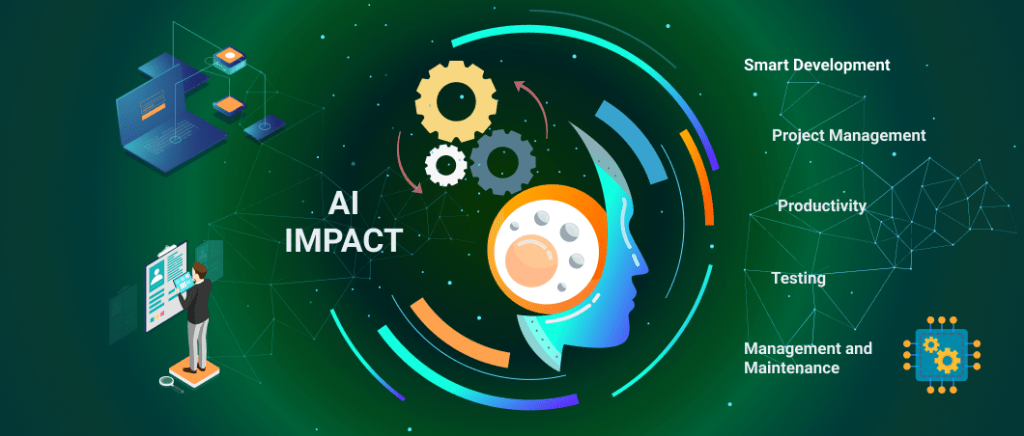
AI in software development offers a wide range of capabilities:
- Code Generation: AI can generate code snippets and even entire programs, significantly reducing the time required for development.
- Bug Detection and Fixing: AI algorithms can identify and fix bugs in code, improving the quality of software.
- Automated Testing: AI can create and run tests, ensuring the reliability of software applications.
- Natural Language Processing: AI enables more intuitive interaction with software, allowing users to communicate with applications using natural language.
- Predictive Analytics: AI can analyze user behavior and predict how software can be improved for better user experiences.
- Security Enhancement: AI can identify vulnerabilities and threats in software, making it more secure.
AI Software Development Companies Leading the Way
- OpenAI: OpenAI is renowned for its work in natural language processing and generation, producing models like GPT-3. These models can be used to generate human-like text, making it a valuable tool for developers looking to automate content generation, documentation, and even code generation.
- Microsoft: Microsoft has integrated AI into its software development tools, such as Visual Studio IntelliCode. It provides AI-driven code suggestions and refactoring recommendations, which help developers write better code faster.
- IBM: IBM’s Watson is a pioneer in AI-powered solutions for businesses. It offers various AI-driven tools, including those for data analysis and application development. Developers can leverage Watson’s capabilities to enhance their software projects.
- Google: Google’s AI prowess is evident in tools like TensorFlow, a popular open-source machine learning framework. Google’s Cloud AI services also offer pre-trained models and tools for developers to build AI-driven applications.
- Amazon Web Services (AWS): AWS provides AI and machine learning services like SageMaker, making it easier for developers to integrate AI into their applications. AWS also offers solutions for natural language processing, computer vision, and speech recognition.
- UiPath: Focused on robotic process automation (RPA), UiPath uses AI to automate repetitive tasks in software development, such as data entry, testing, and debugging.
- NVIDIA: NVIDIA is a leader in AI hardware, producing GPUs optimized for AI and deep learning tasks. These GPUs are essential for training AI models used in software development.
- Cognizant: As a technology consulting firm, Cognizant specializes in helping businesses adopt AI and automation. They offer AI services that span various industries and can be valuable for software developers working on industry-specific solutions.
The Benefits of AI in Software Development
AI is not just a buzzword in the software development world; it brings tangible benefits to developers and organizations alike.
1. Faster Development: AI can automate coding tasks, significantly reducing development time.
2. Improved Quality: AI helps identify and fix bugs early in the development process, leading to more robust software.
3. Enhanced User Experiences: With AI, developers can create more intuitive, user-friendly interfaces and experiences.
4. Increased Security: AI can proactively detect and address vulnerabilities, making software more secure.
5. Better Data Analysis: AI can process and analyze large datasets, offering valuable insights for decision-making and optimization.
Challenges and Ethical Considerations
While AI holds immense potential for software development, it also presents challenges and ethical considerations. Developers and AI software development companies must be vigilant about the following:
1. Bias in AI: AI models can inherit biases present in the training data, potentially leading to biased software.
2. Privacy Concerns: The use of AI in software can raise concerns about data privacy and security.
3. Job Displacement: Automation through AI may change the nature of certain software development jobs, requiring adaptation in the workforce.
4. Ethical Use: Developers must ensure AI is used ethically and responsibly, avoiding misuse or harmful consequences.
Conclusion
AI in software development is transforming the industry by enhancing development speed, code quality, and user experiences. Leading AI software development companies are pioneering the integration of AI tools and services into the software development process. As AI continues to evolve, developers and organizations must navigate both the opportunities and challenges it presents, always striving for ethical and responsible AI development. With AI becoming an integral part of software development, the future promises more innovation and efficiency, ultimately benefiting both developers and end-users.
 Archie Evans News